


 NECKLACES

 Shop now, pay later
Quartz
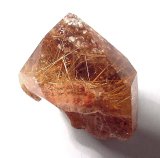
quartz family
Quartz jewelry
Quartz is a silicon dioxide mineral (SiO₂) and one of the most abundant crystalline materials in the Earth's crust. The specimen shown here is a rutilated variety — transparent to semi-transparent brown and gold quartz threaded with fibrous rutile needles (titanium dioxide). The broader quartz family spans colorless rock crystal, purple amethyst, yellow citrine, pink rose quartz, gray to black smoky quartz, and cryptocrystalline types such as agate, carnelian, and chalcedony.
Origin and Key Properties of Quartz
Commercial quartz comes from deposits on nearly every continent. Brazil (Minas Gerais and Bahia) remains the largest source of clear, amethyst, citrine, and rutilated quartz. Madagascar supplies rose quartz and smoky material; Arkansas in the United States produces high-clarity rock crystal; Uruguay yields deep-purple amethyst; and the Swiss and Austrian Alps have historically produced collector-grade smoky and faden quartz. Rutilated quartz, like the piece pictured, is mined mainly in Minas Gerais.
Quartz registers 7 on the Mohs hardness scale, with a trigonal crystal system, vitreous luster, and no cleavage — which is why it holds up well in daily-wear rings. Transparency runs from water-clear to translucent to opaque depending on variety and inclusions. Specific gravity sits around 2.65, and the refractive index is 1.544–1.553.
Treatments are common and should be disclosed. Most commercial citrine is heat-treated amethyst from Brazil. Smoky quartz is frequently produced by irradiating clear quartz. Some pale amethyst is heated to deepen color. Rutilated quartz, rose quartz, and rock crystal are typically sold untreated. Dyed quartz and quartz doublets exist in the low end of the market — reputable sellers will state when material is natural versus enhanced.
Quartz in Sterling Silver Jewelry
Transparent varieties (amethyst, citrine, smoky, rutilated, rose) are most often faceted into rounds, ovals, cushions, and emerald cuts to show internal clarity and dispersion. Translucent and opaque types — chalcedony, agate, carnelian — are cut as cabochons or carved. Raw quartz points and druzy clusters also appear in pendants and statement rings. Sterling silver (.925) suits the full color range because the cool metal tone neither competes with warm golden rutile nor flattens cooler purples and pinks. Our quartz jewelry collection covers rings, pendants, earrings, and bracelets typically priced from $25 to $180 depending on size, cut, and variety.
For everyday wear, a bezel-set cabochon in sterling protects the edges of softer inclusions, while prong-set faceted stones maximize light return. Rutilated quartz pendants are a strong choice when you want visible inclusions as the focal point rather than color saturation.
Care and Cleaning
Clean quartz with warm water, mild dish soap, and a soft brush; rinse and dry with a lint-free cloth. Ultrasonic and steam cleaners are generally safe for untreated clear quartz but should be avoided on dyed, fracture-filled, or heavily included stones. Keep amethyst and rose quartz out of prolonged direct sunlight, which can fade color. Store pieces separately in a soft pouch to prevent harder gems (topaz, sapphire, diamond) from scratching the surface, and remove rings before chlorine exposure or heavy lifting.
Frequently Asked Questions
What is quartz, in simple terms?
Quartz is crystallized silicon dioxide (SiO₂), the same chemical compound as sand but grown into hexagonal crystals. It comes in many colors because trace elements and natural irradiation produce amethyst, citrine, smoky, rose, and rutilated varieties from the same base mineral.
Is quartz durable enough for a ring?
Yes. At Mohs 7 with no cleavage planes, quartz handles daily wear better than softer stones like opal (5.5–6.5) or turquoise (5–6). A protective bezel setting extends its life in rings worn every day.
How can I tell natural quartz from glass or synthetic?
Natural quartz usually contains small inclusions, veils, or growth lines visible under 10x magnification; glass tends to show gas bubbles and swirl marks. Natural quartz also feels cooler to the touch and has a specific gravity of 2.65 versus about 2.5 for most glass. Synthetic (hydrothermal) quartz is chemically identical and requires lab testing to separate from natural material.
Does quartz need to be recharged or cleansed?
That is a metaphysical practice rather than a gemological requirement. From a jewelry-care standpoint, quartz only needs physical cleaning with soap and water to remove skin oils and lotion residue that dull its luster.
Talk to Our Jewelry Experts
Monday to Friday from 9AM to 5PM EST
