


 NECKLACES

 Shop now, pay later All Bracelets & Necklaces & Earrings 96% OFF + Other 95% OFF
 Pearl
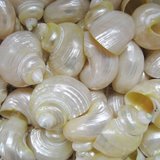
pearl family
Pearl jewelry
Pearl is an organic gem produced by living mollusks, making it one of only a few gemstones not mined from rock. Chemically, a Pearl consists of calcium carbonate (CaCO₃) in the form of aragonite, bound by an organic protein called conchiolin, with trace water content. Colors range from classic white and cream through silver, gold, pink, lavender, peacock green, and black, depending on the host mollusk species and water conditions.
Origin and Key Properties of Pearl
Natural Pearl fisheries historically centered on the Persian Gulf (Bahrain, Qatar), the Gulf of Mannar between India and Sri Lanka, the Red Sea, and the pearl-producing rivers of the American Midwest, particularly the Mississippi and Tennessee basins. Today, more than 99% of Pearls on the market are cultured. Japan's Akoya farms (Mikimoto pioneered the technique in 1893), the saltwater atolls of French Polynesia for Tahitian Pearls, and the warm waters of Australia, Indonesia, and the Philippines for South Sea Pearls supply the saltwater trade. China dominates freshwater Pearl production from Hyriopsis mussels grown in lakes and reservoirs.
Pearl sits at 2.5 to 4.5 on the Mohs scale, softer than virtually every other gem used in jewelry. Specific gravity runs 2.60–2.85, and the material is opaque with a characteristic nacreous luster caused by light interference across microscopic aragonite platelets. Pearls are sensitive to acids, heat, and dry air; the conchiolin binder can dehydrate and crack if neglected.
Treatments are routine and should be disclosed. Bleaching to even out body color is standard for Akoya Pearls. Dyeing produces black, chocolate, and fashion colors in freshwater goods. Irradiation darkens the nucleus to create gray and blue-gray tones. Luster enhancement with mild polishing compounds and maeshori pre-treatments are common in Japan. Untreated natural-color Tahitian and South Sea Pearls command the highest prices.
Pearl in Sterling Silver Jewelry
Because Pearls are drilled rather than faceted, jewelers work with whole rounds, button shapes, rice and potato freshwater drops, coin Pearls, and irregular baroques. Half-drilled Pearls sit on posts for studs and pendants; fully drilled Pearls are strung or set on head pins. Sterling silver (.925) pairs well with Pearl because the cool metal tone reinforces the cool iridescence of white and silver bodies while still flattering warmer golden and peach overtones. Silver settings also keep cost accessible on larger Pearls where gold mounts would double the retail.
At SilverRush Style, most pearl jewelry falls in the $25–$180 range, covering freshwater studs, drop earrings, pendants, and strand necklaces in sterling silver. Larger baroque and multi-strand pieces reach higher. We source cultured freshwater Pearls for most designs and disclose dyed or color-treated material in the product description.
Care and Cleaning
Wipe Pearls with a soft damp cloth after wearing to remove perfume, hairspray, and skin oils — all of which etch nacre. Never use ultrasonic or steam cleaners, ammonia, vinegar, or commercial jewelry dips. Store Pearls flat in a soft pouch, separate from harder gems that will scratch them, and avoid sealed plastic bags and safes with desiccants, since Pearls need ambient humidity to prevent cracking.
Frequently Asked Questions
Are Pearls a gemstone?
Yes. Pearls are classified as an organic gemstone, alongside amber, coral, and jet. They are not minerals in the strict geological sense because they form inside a living organism, but the gem trade, GIA, and CIBJO all recognize Pearls as gems.
What is the ancient Greek word for Pearl?
The Greek word is margaritari (μαργαριτάρι), from margarites (μαργαρίτης). The name Margaret derives from the same root. The modern English word Pearl arrived later through the Latin perla and Old French perle.
Is there another name for Pearl?
In the trade, Pearls are also called margarites or nacre gems. Specific types carry their own names: Akoya, Tahitian, South Sea, Keshi, Mabe, and Biwa. Mother-of-pearl refers to the same nacre material when it lines the inside of the shell rather than forming a Pearl.
How can you tell a real Pearl from an imitation?
Rub the Pearl gently against the edge of a front tooth. Real and cultured Pearls feel slightly gritty due to the layered aragonite; glass and plastic imitations feel smooth. Real Pearls also show slight size and shape variation within a strand, small surface irregularities under magnification, and cool temperature against the skin.
Talk to Our Jewelry Experts
Monday to Friday from 9AM to 5PM EST
Recently Viewed


