


 NECKLACES

 Shop now, pay later
Green amethyst
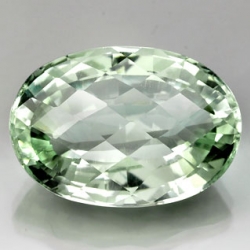
amethyst family
Green amethyst jewelry
Green amethyst, known in gemology as prasiolite, is a transparent green variety of quartz (silicon dioxide, SiO₂) formed when purple amethyst or yellowish quartz is subjected to controlled heat. Its color ranges from pale mint to a deeper leek-green, with the softer shades most common in commercial gemstones. Because the stone belongs to the macrocrystalline quartz family, it shares the same durability and clarity profile as citrine and rock crystal, making it a practical choice for everyday rings, pendants, and earrings.
Origin and Key Properties of Green Amethyst
Almost all prasiolite on the market originates from a single deposit in Montezuma, Minas Gerais, Brazil, where iron-bearing amethyst responds predictably to heat. Smaller quantities come from the Thunder Bay area of Ontario, Canada, and from deposits in Poland and Namibia. Natural, untreated green quartz does exist but is rare enough that any green amethyst you encounter at retail should be assumed to be heat-treated.
Chemically, green amethyst is SiO₂ with trace iron responsible for its color. It measures 7 on the Mohs hardness scale, has a trigonal crystal system, a vitreous luster, and a refractive index of 1.544–1.553. Transparency runs from eye-clean to lightly included; the specimen shown above is a faceted oval with no visible inclusions, which is typical of jewelry-grade material.
On treatment: the standard process is heating purple amethyst from Montezuma to 470–750°C, which shifts the iron centers and produces the green hue. This treatment is permanent and stable under normal wear. A separate category of "green quartz" is irradiated rather than heated; reputable sellers disclose which process was used. All green amethyst sold at SilverRush Style is heat-treated natural quartz.
Green Amethyst in Sterling Silver Jewelry
Because the color is pale, green amethyst is almost always faceted rather than cut as a cabochon — facets return light through the stone and deepen the perceived saturation. Oval, cushion, emerald, and round brilliant cuts dominate the market, with larger stones (8 ct and up) being common since the rough takes polish well and pale color benefits from depth. Cabochon and raw-crystal cuts turn up occasionally in artisan work but are the exception.
Sterling silver (.925) suits prasiolite for two reasons: the cool white metal doesn't compete with the stone's soft green, and silver settings keep piece prices reasonable for stones that often weigh several carats. Most green amethyst jewelry at SilverRush Style falls between $30 and $120, with statement rings and larger pendants reaching $150–$200 depending on carat weight and setting complexity.
Care and Cleaning
Clean green amethyst with warm water, mild dish soap, and a soft brush. Avoid ultrasonic and steam cleaners, which can stress heat-treated stones, and keep the gem away from bleach and harsh solvents. Prolonged exposure to direct sunlight or high heat can fade the color over time, so store pieces in a pouch or lined box away from windows and radiators.
Frequently Asked Questions
What is a green amethyst?
Green amethyst is the trade name for prasiolite, a green variety of quartz produced when iron-bearing amethyst from specific deposits (mainly Montezuma, Brazil) is heated to 470–750°C. It has the same chemistry as purple amethyst — SiO₂ with trace iron — and the same 7 Mohs hardness.
Is green amethyst a real gemstone?
Yes. It's natural quartz crystal that has been heat-treated to produce a stable green color. The material itself is mined from the ground; only the hue is enhanced. Heat treatment is standard industry practice and is disclosed on the product page.
How can you tell green amethyst from peridot or green quartz glass?
Peridot shows strong double refraction visible through the table, while green amethyst is singly refractive in effect for most viewing angles and shows no doubling. Glass imitations lack the crisp facet edges of quartz and often contain tiny gas bubbles under 10x magnification.
Does green amethyst fade?
Under normal wear, no. Extended exposure to strong sunlight or temperatures above roughly 150°C can lighten the color, so avoid leaving pieces on sunny windowsills or in hot cars for long periods.
Talk to Our Jewelry Experts
Monday to Friday from 9AM to 5PM EST
