

 NECKLACES

 Shop now, pay later All Bracelets & Necklaces 96% OFF + All Rings 96% OFF
 Glass
glass family
Glass jewelry
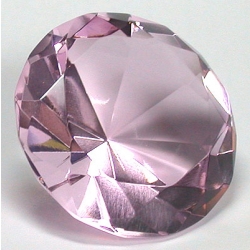
Glass is a non-crystalline amorphous solid, most commonly produced by fusing silica (SiO₂) with soda and lime at temperatures above 1,400°C (2,550°F). Used in jewelry for more than 5,000 years, it ranges across the full color spectrum depending on the metallic oxides added to the melt: cobalt for blue, copper for turquoise and red, iron for green, gold chloride for pink and ruby tones. The pink faceted specimen shown here is transparent art glass cut to mimic the optical behavior of a natural gemstone.
Origin and Key Properties of Glass
Archaeological evidence places the earliest manufactured glass in Mesopotamia and Egypt around 3500 BCE, with mature glassmaking industries emerging at Trier (Roman Germany), Alexandria, and later Murano, Venice, from the 13th century onward. Modern jewelry glass is produced in the Czech Republic (Bohemian and Preciosa crystal), Austria (Swarovski, historically), Japan (Miyuki and Toho seed beads), Italy (Murano lampwork), and the United States. "Roman glass" sold today is authentic ancient glass recovered from archaeological sites in Israel and the Levant, oxidized over centuries to produce iridescent patina.
Glass rates 5.5 on the Mohs scale, softer than quartz (7) and comparable to obsidian, which is naturally occurring volcanic glass. The base chemistry is roughly 70-75% silica, 12-16% sodium oxide, and 5-11% calcium oxide, with specific gravity between 2.4 and 2.8. Transparency ranges from fully transparent (crystal, lead glass) through translucent (opalescent, moonstone glass) to opaque (millefiori, mosaic). Optical properties vary with lead content: leaded crystal contains 24-33% lead oxide, which raises the refractive index to about 1.7 and produces the high dispersion associated with cut crystal stones.
Treatments are standard and should be disclosed. Dichroic glass is coated with thin metallic oxide layers in a vacuum chamber to produce color shift. Foil-backed stones (rhinestones, flat-backs) are silvered on the pavilion to increase brilliance. Lampwork beads are annealed in a kiln to release internal stress. Roman glass is stabilized with clear resin or sealed to protect the fragile patina. Color is integral to the melt, not dyed, so it does not fade.
Glass in Sterling Silver Jewelry
Glass takes nearly any cut a lapidary can apply to mineral gemstones: faceted rounds, ovals, and pears for rings and pendants; smooth cabochons for bezel-set bracelets; freeform lampwork shapes for statement necklaces; and drilled beads for strung designs. Sterling silver (.925) is the standard setting metal because its cool white tone reads as neutral against any glass color, and the alloy is rigid enough to hold prong and bezel settings securely around a stone that is softer and more brittle than quartz. Browse our glass jewelry collection for current pieces, with most items priced between $25 and $120.
Murano and lampwork pieces command the higher end of that range because each bead is formed individually at the torch. Roman glass set in sterling silver typically falls between $45 and $150 depending on the size and quality of the iridescent surface. Seed-bead and pressed-glass designs run under $40.
Care and Cleaning
Clean glass jewelry with warm water, mild dish soap, and a soft cloth. Avoid ultrasonic cleaners and steam cleaners, which can crack glass along internal stress lines or damage foil backing and dichroic coatings. Keep glass away from bleach, acetone, and abrasive polishes. Store each piece in a separate pouch or lined compartment, as glass scratches against harder stones like topaz, sapphire, and diamond. Remove before sports, gardening, and housework.
Frequently Asked Questions
Is glass considered a real gemstone?
Glass is not a mineral and does not meet the geological definition of a gemstone, but it has been used in jewelry continuously since 3500 BCE. Obsidian and moldavite are natural glasses and are classified as gem materials. Manufactured glass is sold as itself and should always be disclosed as glass, not misrepresented as natural stone.
How can I tell glass from quartz or crystal?
Glass feels warmer to the touch than quartz, which conducts heat away from the skin. Under magnification, glass often shows swirl marks, round gas bubbles, or mold seams, while natural quartz contains angular inclusions and growth lines. Glass also has a lower hardness (5.5 vs. 7), so a quartz point will scratch glass but not the reverse.
What is Roman glass?
Roman glass is authentic ancient glass, typically 1,800 to 2,000 years old, excavated from sites across the former Roman Empire, especially Israel. Long burial in mineral-rich soil produces the iridescent blue-green patina prized in jewelry. Fragments are cut, stabilized, and set in sterling silver bezels.
Does glass jewelry fade over time?
Color within solid glass does not fade because the pigment is fused into the melt at high temperature. Surface treatments can wear: dichroic coatings may abrade if scratched, and foil backing on rhinestones can tarnish if the stone is submerged in water. Solid-color lampwork and Murano glass retain their color indefinitely with normal care.
Talk to Our Jewelry Experts
Monday to Friday from 9AM to 5PM EST
Recently Viewed