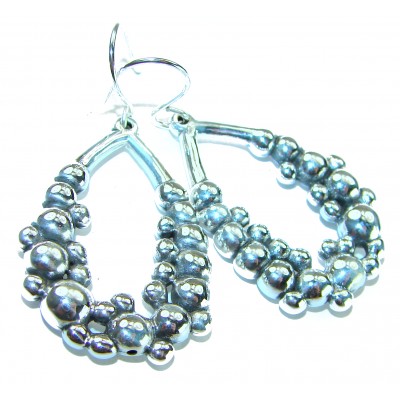


 NECKLACES

 Shop now, pay later All Bracelets & Necklaces 96% OFF + All Rings 96% OFF
 Turquoise
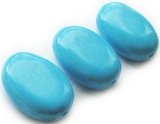
Turquoise jewelry
Turquoise is an opaque blue-to-green gemstone classified as a hydrous phosphate of copper and aluminum, with the chemical formula CuAl₆(PO₄)₄(OH)₈·4H₂O. The stone forms over millions of years when acidic, copper-rich groundwater seeps through aluminum-bearing rock in arid climates. Color ranges from sky blue and robin's-egg blue through blue-green to apple green, driven by copper content (blue) and iron substitution (green). Many specimens carry a matrix of host rock in brown, black, or tan webbing, though the top-grade material is matrix-free.
Origin and Key Properties of Turquoise
The oldest known Turquoise mines operated on the Sinai Peninsula around 3000 BC under the Egyptian First Dynasty. Persian deposits near Nishapur, Iran, have produced pure sky-blue material for more than 2,000 years, and "Persian blue" still denotes the highest grade of matrix-free stone. Hubei Province in China has been a steady source for centuries. Today the American Southwest is the largest producer, with commercial output from Kingman and Sleeping Beauty (Arizona) and Royston and Number 8 (Nevada). Sleeping Beauty stopped Turquoise extraction in 2012, pushing prices for that specific material up sharply. Mexico, Chile, and Australia supply smaller volumes.
Turquoise measures 5 to 6 on the Mohs scale, making it softer than quartz and vulnerable to scratching from sand, metal tools, and abrasive cleaners. It is opaque with a waxy to subvitreous luster and a specific gravity around 2.6 to 2.9. Density, porosity, and color vary by mine — Kingman tends toward bright blue with black matrix, Royston runs blue-green with brown web, and Sleeping Beauty is known for clean sky blue.
Because most rough is porous and chalky, the majority of Turquoise on the market is treated. Stabilization uses epoxy or acrylic resin forced into the stone under pressure to harden it and lock in color; this is standard for about 90% of commercial material and should be disclosed. Waxing and oiling are older methods that dull with time. Reconstituted Turquoise is ground powder bonded with resin, and "block" or "Turquenite" is dyed howlite or magnesite — neither is real Turquoise. At SilverRush Style we sell natural and stabilized stones and label them as such.
Turquoise in Sterling Silver Jewelry
Turquoise is almost always cut en cabochon — a domed, polished shape that shows off color and matrix without the brittleness issues of faceting. Freeform slabs, nuggets, and inlay pieces are also common, and Southwestern silversmiths frequently use rough-backed or natural-edge stones. Sterling silver (.925) is the traditional pairing: the cool white metal reads cleanly against both sky-blue and green-blue tones, and the price point keeps larger statement stones accessible. Our turquoise jewelry collection typically runs $25 to $180 for rings, pendants, and earrings, with larger cuff bracelets and multi-stone pieces reaching higher.
Setting style matters with a soft stone. Bezel settings protect the girdle and are the standard for Turquoise rings and pendants in .925 silver. Prong settings appear on smaller accent stones where the cabochon sits low in the mount. Inlay work — flat Turquoise pieces fitted into channels — is a hallmark of Zuni and Navajo silversmithing and holds up well for everyday wear.
Care and Cleaning
Clean Turquoise with a soft, dry or barely damp cloth. Skip ultrasonic and steam cleaners, ammonia, bleach, and jewelry dips — all will damage the stone or strip stabilizing resin. Keep it away from perfume, hairspray, lotion, and chlorinated water, and remove rings before washing hands with harsh soap. Prolonged sun exposure can fade color, especially in untreated material. Store pieces in a soft pouch, separated from harder gems like quartz or topaz.
Frequently Asked Questions
Is Turquoise a birthstone?
Yes. Turquoise is one of the official December birthstones, alongside tanzanite and zircon.
How can I tell real Turquoise from fake?
Real Turquoise feels cool and slightly waxy, shows irregular color variation, and often carries natural matrix. Dyed howlite ("block Turquoise") shows uniform color and white interior where chipped. Ask the seller whether a stone is natural, stabilized, reconstituted, or imitation — reputable sellers disclose.
Can Turquoise get wet?
Brief contact with clean water is fine, but Turquoise is porous and can absorb soap, oils, and chlorine, which cause color change and cracking. Remove Turquoise jewelry before showering, swimming, or using a hot tub.
Why is some Turquoise so expensive?
Price depends on mine source, color saturation, matrix pattern, and whether the stone is natural or stabilized. Natural untreated material from closed mines like Sleeping Beauty, Lander Blue, or Lone Mountain commands premiums because supply is finite.
Talk to Our Jewelry Experts
Monday to Friday from 9AM to 5PM EST
Recently Viewed