


 NECKLACES

 Shop now, pay later
Sugilite
Sugilite jewelry
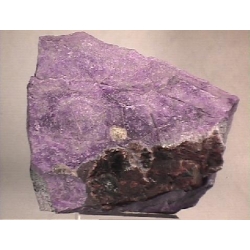
Sugilite is a rare cyclosilicate mineral prized for its purple to magenta color, with a chemical makeup that includes potassium, sodium, lithium, iron, manganese, and aluminum silicate. First identified in 1944 by Japanese petrologist Ken-ichi Sugi, the stone was largely a mineralogical curiosity until gem-grade deposits surfaced decades later. It is typically opaque with a waxy to vitreous luster, and the trade also knows it as luvulite, royal lavulite, and royal azel.
Sugilite Origin and Key Properties
The world's most significant gem-grade deposit sits at the Wessels Mine in the Kalahari Manganese Field of the Northern Cape, South Africa, discovered in 1979 at roughly 3,200 feet underground. This source produces the rich purple material most collectors associate with the stone. Smaller finds have been reported in Iwagi Islet, Japan (the original type locality), Liguria in Italy, New South Wales in Australia, Madhya Pradesh in India, and Quebec in Canada, though these localities rarely yield jewelry-grade rough.
Sugilite registers 5.5 to 6.5 on the Mohs scale, with a specific gravity of 2.75–2.80 and a refractive index of 1.607–1.610. The chemical formula is KNa₂(Fe,Mn,Al)₂Li₃Si₁₂O₃₀. Color ranges from pale grayish lavender through pink and magenta to deep reddish purple; the most valued material shows saturated, even purple with minimal black manganese matrix. Cleavage is poor, which makes the stone more durable than its hardness rating suggests. Most sugilite is opaque, though thin translucent sections do occur in higher grades.
On treatments: gem-grade sugilite is almost always sold untreated. The color is natural, and the stone does not respond well to the heat or irradiation processes used on other gems. Some lower-grade cabochons are stabilized with resin to harden porous areas, and rare pieces are dyed to deepen pale material. Reputable sellers disclose stabilization; at SilverRush Style we source natural, untreated sugilite.
Sugilite in Sterling Silver Jewelry
Because the stone is opaque to semi-translucent, cutters work sugilite almost exclusively as cabochons, freeform shapes, tumbled drops, and beads. Faceted sugilite exists but is extremely rare and priced accordingly. The purple body color pairs cleanly with the cool white of sterling silver (.925), which doesn't compete with the hue the way yellow gold can. Bezel settings are the norm since they protect the stone's edges given the mid-range hardness.
Expect entry-level pieces with lighter, matrixed material to start around $40–$80 for pendants and earrings, with mid-grade rings running $90–$200. Top-color South African cabochons in substantial sizes can push well above $300. Browse our full sugilite jewelry collection for current inventory across rings, pendants, and earrings.
Care and Cleaning
Clean sugilite with warm water, mild soap, and a soft cloth. Skip the ultrasonic and steam cleaners, and keep the stone away from bleach, acetone, and acid-based household cleaners. Prolonged direct sunlight can fade the color over time, so store pieces in a lined box or pouch, separated from harder stones that could scratch the surface.
Frequently Asked Questions
Is sugilite a rare stone?
Yes. Gem-grade sugilite is one of the rarer colored stones on the market, with the bulk of jewelry-quality material coming from a single mine in South Africa. Supply has tightened since the early 2000s, and prices for saturated purple cabochons have climbed steadily.
How can you tell real sugilite from fake?
Natural sugilite shows subtle color variation, mottling, or thin black manganese veining even in top grades. Dyed howlite and plastic imitations tend to look too uniform, feel warmer to the touch, and are noticeably lighter in weight. A refractive index reading of 1.607–1.610 and specific gravity around 2.77 confirm the identification.
What colors does sugilite come in?
The color range runs from pale pinkish lavender through magenta and reddish purple to deep royal purple. Blue-purple and near-black purple material also exists. The saturated, even purple grade known in the trade as "gel sugilite" is the most sought-after.
Can sugilite be worn daily?
With its 5.5–6.5 Mohs hardness and poor cleavage, sugilite holds up to regular wear in pendants, earrings, and bracelets. For rings, choose protective bezel settings and remove the piece before manual work, cleaning, or gardening to prevent surface scratches.
Talk to Our Jewelry Experts
Monday to Friday from 9AM to 5PM EST
