

 NECKLACES

 Shop now, pay later
Sapphire
Sapphire jewelry
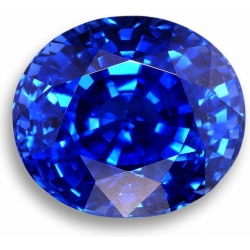
Sapphire is a gem-quality variety of the mineral corundum, an aluminum oxide (Al₂O₃) colored by trace elements such as iron, titanium, chromium, and vanadium. While blue is the best-known hue, sapphires occur in yellow, pink, orange, green, purple, gray, black, and colorless — every color of corundum except red, which is classified as ruby. The faceted blue specimen shown on this page is typical of the material cut for fine jewelry.
Origin and Key Properties of Sapphire
Historic sources include Kashmir (cornflower-blue stones mined briefly from 1881 into the early 20th century), Mogok in Myanmar, and Sri Lanka, which has produced sapphires for over 2,000 years. Today the leading commercial supplies come from Madagascar (Ilakaka fields, discovered 1998), Australia (Queensland and New South Wales), Thailand, Tanzania, and Montana in the United States, where the Yogo Gulch and Rock Creek deposits yield small, clean stones.
Sapphire ranks 9 on the Mohs scale — second only to diamond among natural gems — with a specific gravity around 3.95–4.03 and a refractive index of 1.762–1.770. Transparency ranges from fully transparent (facet grade) to translucent material cut as cabochons, including star sapphires whose six-rayed asterism is caused by intersecting rutile needle inclusions. Padparadscha, a pink-orange variety named after the lotus flower, commands higher prices than most blues.
Treatment disclosure matters. The large majority of commercial sapphire is heat-treated at 1,600–1,800 °C to deepen color and dissolve silk inclusions; this is a stable, industry-accepted process. Beryllium lattice diffusion, glass filling of fractures, and surface diffusion are also used and must be disclosed separately. Untreated sapphires with lab reports sell at a substantial premium.
Sapphire in Sterling Silver Jewelry
Faceted ovals, rounds, cushions, and emerald cuts dominate sapphire jewelry because the stone's high refractive index rewards precise faceting. Cabochons are reserved for star stones and material with heavy silk. Raw and rough-cut sapphires appear in more casual pieces. Sterling silver (.925) pairs well with blue sapphire — the cool white metal sharpens the saturation of the stone without the warm cast that yellow gold introduces. At SilverRush Style, our sapphire jewelry generally runs from about $30 for small accent stones to $200+ for larger cabochons and multi-stone designs.
Because sapphire is so hard and chemically stable, it holds up to daily wear in rings and bracelets better than softer gems like opal or turquoise. Abrasion and chipping at facet edges remain the main risks, usually from hard knocks rather than routine use.
Care and Cleaning
Clean sapphire jewelry with warm water, mild dish soap, and a soft brush. Ultrasonic and steam cleaners are generally safe for untreated and heat-treated stones but should be avoided on fracture-filled or dyed material. Keep sapphire away from bleach and harsh acids, which attack the sterling silver setting rather than the stone itself. Store each piece in a separate pouch — a Mohs 9 gem will scratch almost anything it touches in a shared jewelry box.
Frequently Asked Questions
What does sapphire mean?
The name comes from the Greek sappheiros, meaning "blue stone," with a probable older root in the Sanskrit shanipriya ("dear to Saturn"). Historically, sapphire has stood for wisdom, fidelity, and truth, which is why it became a common engagement-ring stone long before diamond dominated the category.
How do you describe a sapphire?
A sapphire is a transparent to translucent corundum gem with a vitreous luster, Mohs hardness of 9, and colors driven by trace elements. Blue stones owe their color to iron and titanium; pink stones to chromium; yellow stones to iron alone.
Are all sapphires blue?
No. Corundum in any color other than red is called sapphire, and non-blue stones are marketed as "fancy sapphires" — yellow, pink, green, purple, orange, black, and colorless (white). The pink-orange padparadscha is the most valued fancy color.
Is sapphire suitable for everyday wear?
Yes. At Mohs 9 with no cleavage, sapphire is one of the most durable gems available and works well in rings, bracelets, pendants, and earrings worn daily. Protective bezel or half-bezel settings are recommended for active wearers to guard facet edges.
Talk to Our Jewelry Experts
Monday to Friday from 9AM to 5PM EST
Recently Viewed