


 NECKLACES

 Shop now, pay later
Ruby
Ruby jewelry
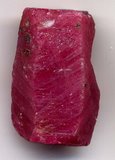
Ruby is the red variety of corundum (Al₂O₃), an aluminum oxide mineral colored by trace chromium that produces hues from pinkish red to deep blood-red. The top color grade, called "pigeon's blood," describes a pure red with slight bluish undertone and strong fluorescence. Ruby ranks second only to diamond in hardness among natural gemstones, making it one of the few colored stones suitable for daily-wear rings. The specimen shown here is an opaque crystalline piece with typical dark inclusions — iron- and chromium-bearing zones visible to the eye.
Ruby Origin and Key Properties
The Mogok Valley in Myanmar has produced Ruby for more than 800 years and still sets the benchmark for color. Mozambique became the largest commercial source after the 2009 Montepuez discovery and now supplies most of the material in the global market. Additional deposits occur in Thailand, Vietnam, Sri Lanka, Madagascar, Tanzania, and Afghanistan. Thai and Cambodian stones tend toward darker brownish reds due to higher iron content, while Mozambique rough bridges Burmese saturation with better clarity. Gem-quality crystals above 3 carats are uncommon.
Ruby measures 9 on the Mohs scale, with a specific gravity of 3.97–4.05 and a refractive index of 1.762–1.770. The chemical formula is Al₂O₃ with Cr³⁺ as the chromophore; iron and titanium traces shift tone toward purple or brown. Transparency ranges from transparent to opaque, and almost every natural ruby contains rutile "silk," fingerprint inclusions, or color zoning.
Treatment disclosure matters. An estimated 90%+ of commercial rubies receive heat treatment (typically 1,600–1,800°C) to improve color and dissolve rutile silk; this is stable and industry-accepted. Lower-grade material is often lead-glass filled or flux-healed to disguise fractures — these treatments are less durable and require gentle handling. Untreated rubies with lab certification command significant premiums. SilverRush Style discloses treatment type on item pages where known.
Ruby in Sterling Silver Jewelry
Cabochon cuts dominate silver-set ruby because most rough falls into the opaque to translucent grades suited to dome shapes, and cabs showcase the stone's internal glow without demanding eye-clean material. Faceted ovals, cushions, and rounds appear in higher-clarity pieces, while raw and slice forms work for pendants and statement rings. Sterling silver (.925) gives ruby a cool, reflective bezel that pushes the red forward — warmer metals compete with the chromium color, while silver frames it. Pricing in our ruby jewelry collection typically runs $40–$250, depending on carat weight, clarity, and setting complexity.
Smaller accent rubies (2–4mm) pair well with sterling in stackable rings and studs. Larger solitaires (6mm and up) usually feature opaque to semi-translucent stones, often from African or Indian sources, set in prong or bezel mounts.
Care and Cleaning
Clean ruby with warm water, mild dish soap, and a soft brush. Ultrasonic and steam cleaners are generally safe for untreated and heat-treated stones but should be avoided on glass-filled or fracture-healed rubies. Keep ruby away from harsh chemicals (bleach, chlorine) and store it separately in a soft pouch — at Mohs 9, ruby will scratch softer stones and silver surfaces kept alongside it.
Frequently Asked Questions
Is ruby a real gemstone or is it treated?
Natural ruby is the red form of corundum mined from deposits worldwide. Most commercial rubies are heat-treated to improve color — a permanent, stable treatment accepted as standard. Lead-glass filling and flux healing are separate treatments used on lower grades and should always be disclosed before purchase.
How can I tell if a ruby is natural or synthetic?
Natural rubies almost always contain inclusions visible under 10x magnification — rutile silk, fingerprint patterns, or color zoning. Synthetic (flame-fusion or flux-grown) rubies are typically too clean or show curved striae and gas bubbles. A reputable gemologist or lab report from GIA, AGL, or GRS is the reliable test.
Can I wear ruby jewelry every day?
Yes. At Mohs 9, ruby handles daily wear better than almost any other colored stone. The exception is glass-filled material, which can be damaged by heat, ultrasonic cleaners, and household chemicals. For glass-filled rubies, remove before cleaning, swimming, or hand-washing with harsh soaps.
Why does ruby vary so much in price?
Color saturation, clarity, origin, and treatment level drive price. Untreated Burmese pigeon's blood rubies can exceed $10,000 per carat at auction, while heated Mozambique commercial goods run $50–$500 per carat, and opaque cabochon-grade material sells for a few dollars per carat. Sterling silver pieces use the accessible middle range.
Talk to Our Jewelry Experts
Monday to Friday from 9AM to 5PM EST
