


 NECKLACES

 Shop now, pay later All Bracelets & Necklaces 96% OFF + All Rings 96% OFF
 Prehnite
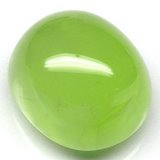
Prehnite jewelry
Prehnite is a calcium aluminum phyllosilicate mineral with the chemical formula Ca₂Al(AlSi₃O₁₀)(OH)₂, recognized for its pale yellow-green to apple-green color and waxy, translucent luster. It belongs to the orthorhombic crystal system and typically forms botryoidal (grape-like) aggregates, thick crusts, or epimorphs over other minerals such as laumontite. The stone ranges from colorless through gray, white, yellow, and the characteristic soft green that collectors associate with the species.
Origin and Key Properties of Prehnite
Prehnite was first identified in 1788 at the Karoo dolerites near the Cape of Good Hope, South Africa, by Colonel Hendrik von Prehn, making it the first mineral ever named after a person. Today the most significant commercial deposits come from Mali (the Brakna and Kayes regions produce yellow-green gem material), Australia (Wave Hill, Northern Territory, and Prospect Quarry, New South Wales), China (Fujian and Sichuan provinces), South Africa, Namibia, Scotland, and the basalt flows of New Jersey and Virginia in the United States. Australian prehnite is particularly prized for its apple-green saturation, while Malian rough often shows a lemon-yellow tone.
Prehnite rates 6 to 6.5 on the Mohs hardness scale, with a specific gravity of 2.80 to 2.95 and a refractive index of 1.611 to 1.669. It forms through hydrothermal activity in cavities of mafic volcanic rocks, often alongside zeolites, datolite, and native copper. Transparency ranges from translucent to semi-transparent; fully transparent facet-grade rough is uncommon, which answers why collectors consider clean gem material rare. Heating causes prehnite to release structural water irreversibly, so it should never be exposed to torches or steam.
Treatment disclosure: most prehnite on the market is untreated. The color and translucency you see are natural. Some cabochons are lightly waxed or oiled to deepen surface luster, and a small percentage of lower-grade material is dyed to intensify green tones. SilverRush Style sources natural, untreated prehnite unless stated otherwise on the listing.
Prehnite in Sterling Silver Jewelry
Prehnite is most often cut en cabochon to highlight its soft internal glow and any fibrous chatoyancy. Faceted prehnite exists but requires clean, transparent rough — usually from Mali — and commands higher prices. Raw and slice forms are also popular for pendants where the botryoidal surface is left visible. Sterling silver (.925) pairs well with the stone because the cool white metal reinforces the green without competing with its low saturation; yellow gold tends to wash prehnite out, while silver frames it cleanly.
At SilverRush Style, prehnite jewelry typically ranges from $25 for smaller stud earrings and stacking rings to $120 for larger statement pendants and cuff bracelets with sizable cabochons. Designers often combine prehnite with peridot, pearl, or smoky quartz accents in sterling bezel or prong settings.
Care and Cleaning
Clean prehnite with warm water, mild soap, and a soft cloth. Avoid ultrasonic cleaners, steam cleaners, and household chemicals including bleach and ammonia — these can damage the stone's surface and the silver setting. Keep prehnite away from prolonged direct sunlight and high heat, as the mineral can dehydrate and lose color over time. Store each piece separately in a soft pouch or lined compartment to prevent scratching from harder gems.
Frequently Asked Questions
Is prehnite rare?
Cabochon-grade prehnite is moderately available and affordable, but transparent, facet-grade prehnite with strong color saturation is genuinely rare. Top Malian and Australian gem material represents a small fraction of global output.
What is Australian prehnite?
Australian prehnite comes primarily from the Wave Hill area in the Northern Territory and Prospect Quarry in New South Wales. It is known for a richer apple-green color and translucent-to-transparent clarity compared with most other sources.
What does "batu prehnite" mean?
"Batu" is the Indonesian and Malay word for stone, so "batu prehnite" simply refers to prehnite gemstone. The term appears in Southeast Asian markets where prehnite cabochons are popular for men's rings.
How can I tell prehnite from similar stones?
Prehnite is often confused with hemimorphite, jade, and chrysoprase. It is harder than hemimorphite (6–6.5 vs. 4.5–5) and never shows blue tones. Its refractive index and specific gravity also separate it from jadeite and nephrite under gemological testing.
Talk to Our Jewelry Experts
Monday to Friday from 9AM to 5PM EST
