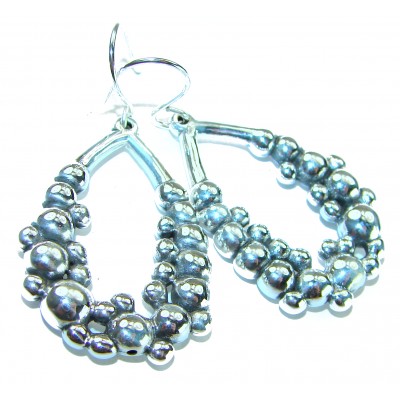


 NECKLACES

 Shop now, pay later All Bracelets & Necklaces 96% OFF + All Rings 96% OFF
 Moonstone
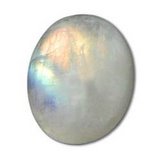
Moonstone jewelry
Moonstone is a potassium-rich orthoclase feldspar known for adularescence, the floating blue-to-white sheen that drifts across the stone as light moves. Chemically it belongs to the feldspar group alongside sunstone and labradorite, and its color range runs from colorless and white through peach, gray, green, and the prized "blue" sheen varieties. Most rough shows a translucent body with a billowy internal glow caused by light scattering between thin alternating layers of orthoclase and albite. The effect is strongest in well-oriented cabochons cut from clean material.
Origin and Key Properties of Moonstone
Historically, the finest blue-sheen Moonstone came from Sri Lanka, specifically the Meetiyagoda and Dumbara regions, where alluvial deposits have been worked for more than a century. India remains the largest source today, producing white, peach, and rainbow (actually a variety of labradorite) material from Tamil Nadu, Bihar, and Odisha. Additional commercial deposits are mined in Myanmar, Madagascar, Tanzania, Brazil, and the Adula Group in the Swiss Alps — the source of the old trade name "adularia."
Moonstone sits at 6 to 6.5 on the Mohs scale, with a specific gravity of 2.56–2.59 and a refractive index of 1.518–1.526. The chemical formula is KAlSi₃O₈ (potassium aluminum silicate). Transparency ranges from transparent to translucent, and the stone has perfect cleavage in two directions, which makes it prone to chipping on hard impact. The most valuable material is colorless to semi-transparent with a strong blue sheen and no visible centipede-like inclusions (the parallel tension cracks common in lesser grades).
Treatment disclosure: the vast majority of natural Moonstone on the market is untreated. Some lower-grade white material is occasionally coated or dyed to deepen body color, and rough is sometimes sugar-treated or impregnated with oil to reduce the visibility of cleavage cracks. Heat treatment is not standard. If a piece is treated, reputable sellers should state it; assume any unusually dark or uniformly colored Moonstone under $20 per carat warrants a question.
Moonstone in Sterling Silver Jewelry
Because adularescence is a surface-and-depth phenomenon, Moonstone is almost always cut en cabochon with a high, smooth dome that lets the sheen roll. Faceted Moonstone exists — usually in colorless Indian material — but it sacrifices the blue glow for brilliance. Raw and slab cuts appear in statement rings and pendants, where the natural layered structure reads as part of the design. Sterling silver (.925) is the standard setting metal: its cool white tone reinforces the blue-white sheen without the yellow cast gold adds, and the softer alloy lets bezel settings hug the curved cabochon without stressing the stone's cleavage planes.
At SilverRush Style, sterling moonstone jewelry typically runs $25–$90 for earrings and smaller pendants, $40–$150 for rings, and $60–$200 for statement necklaces and cuffs, depending on stone size and sheen quality. Rainbow moonstone and strong blue-sheen Ceylon material sit at the top of that range.
Care and Cleaning
Clean Moonstone with warm water, mild soap, and a soft brush, then dry with a lint-free cloth. Avoid ultrasonic and steam cleaners — both can drive existing cleavage cracks wider. Keep the stone away from bleach, acetone, and chlorinated pool water, and remove rings before gardening, gym work, or housework. Store separately in a soft pouch; harder gems like quartz or topaz will scratch the surface.
Frequently Asked Questions
Is moonstone a real gemstone?
Yes. Moonstone is a natural variety of orthoclase feldspar, mined commercially in Sri Lanka, India, Myanmar, and several other countries, and graded by sheen, clarity, and body color.
Can you wear moonstone every day?
Earrings and pendants are fine for daily wear. Rings need more care — at 6 to 6.5 Mohs with perfect cleavage, Moonstone can chip if knocked against counters or keys. Choose a protective bezel setting for everyday rings.
What is the difference between moonstone and rainbow moonstone?
Classic Moonstone is orthoclase feldspar with blue or white adularescence. "Rainbow moonstone" is actually a transparent white labradorite showing multicolored flash. Both are sold under the moonstone name in the trade, but they are distinct minerals.
How can I tell if a moonstone is genuine?
Genuine Moonstone shows adularescence that shifts as you tilt the stone, not a painted-on glow fixed to one spot. It feels cool, has slight internal haze, and often shows faint centipede inclusions under magnification. Glass and opalite imitations show uniform color and no directional sheen.
Talk to Our Jewelry Experts
Monday to Friday from 9AM to 5PM EST
Recently Viewed