


 NECKLACES

 Shop now, pay later All Bracelets & Necklaces 96% OFF + All Rings 96% OFF
 Marcasite
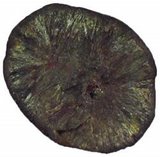
Marcasite jewelry
Marcasite is an iron sulfide mineral (FeS₂) with a pale brass-yellow to silvery metallic color that tarnishes to darker bronze and greenish tones over time. It shares its chemical formula with pyrite but crystallizes in the orthorhombic system rather than cubic, which makes it lighter, more brittle, and prone to breaking down when exposed to humidity. In jewelry, small faceted marcasite points have been set into silver since antiquity, and the stone remains a signature of Victorian, Edwardian, and Art Deco design.
Origin and Key Properties of Marcasite
Historically significant marcasite deposits include the chalk cliffs of Dover in Kent, England, the lead-zinc districts of Joplin, Missouri (Tri-State Mining District), Galena, Illinois, and sedimentary beds across France, Germany, the Czech Republic, and Peru. The mineral forms as both a primary crystal in low-temperature, acidic sedimentary environments and as a secondary replacement in limestone, shale, and coal seams. The distinctive "cockscomb" twinning — blade-like crystals fanning from a shared base — is a field-identification marker that separates it from cubic pyrite.
Marcasite rates 6 to 6.5 on the Mohs scale, with a specific gravity around 4.8 to 4.9. It is opaque with a metallic luster, brittle, and shows uneven fracture. Pure specimens are pale yellow when freshly broken, though oxidation quickly dulls the surface to gray, bronze, or greenish-black. Because the crystal structure is unstable, true marcasite can decompose into sulfuric acid and iron sulfate when stored in damp conditions, which is why most "marcasite jewelry" sold since the 1800s actually uses pyrite — the trade names have been used interchangeably for over 200 years.
Treatments: marcasite and the pyrite used in its place are generally untreated. Stones are cut, faceted (typically rose cut), and sometimes given a polished finish. No heating, dyeing, or irradiation is applied. The only routine process is mechanical cutting and setting.
Marcasite in Sterling Silver Jewelry
The standard cut is a small rose-cut faceted point, usually 1 to 3 mm, pavé-set or bead-set into recessed silver cups. Larger cabochons appear in statement brooches and pendants, and rough pyrite clusters show up in artisan pieces. Sterling silver (.925) is the traditional mount because its cool white tone frames the warm brass glow of the stones without competing for attention, and silver's malleability allows the fine bezel work that Victorian and Art Deco settings require. At SilverRush Style, marcasite jewelry typically runs from $25 for simple earrings to $150 for elaborate pendants, bracelets, and rings with dozens of set stones.
The look suits vintage-style wearers: filigree rings, onyx-and-marcasite cocktail pieces, floral brooches, and cluster earrings. Because each stone is set individually, well-made pieces carry the density and weight that distinguish heirloom-quality work from costume substitutes.
Care and Cleaning
Wipe with a dry soft cloth or a silver polishing cloth. Avoid ultrasonic cleaners, steamers, and any liquid immersion — water and chemical dips can loosen the adhesive in older settings and accelerate oxidation on the stones themselves. Keep marcasite pieces away from perfume, hairspray, and chlorine. Store in a dry, airtight pouch with an anti-tarnish strip; humidity is the main enemy.
Frequently Asked Questions
What is marcasite?
Marcasite is an iron sulfide mineral (FeS₂) with a metallic luster and pale brass color. It shares its chemistry with pyrite but has an orthorhombic crystal structure, making it lighter and more brittle. In the jewelry trade, "marcasite" almost always refers to faceted pyrite stones set in silver.
Is marcasite a real stone?
Yes. Marcasite is a natural mineral, not a synthetic or glass imitation. However, since true marcasite is unstable and crumbles over time, the faceted stones in antique and modern marcasite jewelry are almost always pyrite, which is chemically identical and visually the same.
How do I know if my jewelry is real marcasite?
Genuine marcasite (pyrite) stones are individually cut, rose-faceted, and bead-set or bezel-set into sterling silver. They have a warm brass-gold reflection, not a mirror-bright chrome shine. Glued-in stones, uniform plastic backs, or a magnetic response to a strong magnet suggest imitation. Authentic pieces are typically hallmarked .925 or STERLING.
How do you spell marcasite?
M-A-R-C-A-S-I-T-E. The name derives from the Arabic "marqashīthā," meaning pyrite. British English sometimes uses "marcasite" interchangeably with the older term "white iron pyrite."
Talk to Our Jewelry Experts
Monday to Friday from 9AM to 5PM EST
