


 NECKLACES

 Shop now, pay later
Kyanite
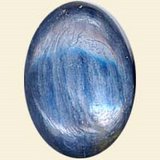
Kyanite jewelry
Kyanite is an aluminum silicate mineral (Al₂SiO₅) best known for its streaky blue crystals, though it also forms in green, grey, black, white, and colorless varieties. The name comes from the Greek kyanos, meaning blue, and was assigned by German geologist Abraham Gottlob Werner in 1789. Kyanite shares its chemistry with andalusite and sillimanite but crystallizes in the triclinic system, producing the bladed, elongated crystals collectors recognize on sight.
Kyanite Origin and Key Properties
Commercial kyanite comes from a short list of deposits: Nepal and the Swiss Alps produce the richest sapphire-blue material, while Brazil (Minas Gerais), Kenya, Tanzania, Myanmar, India, and the United States (notably North Carolina and Virginia) supply the bulk of jewelry-grade rough. Nepali kyanite tends to show the deepest saturation; Brazilian stones often run lighter with silvery streaks, and African sources yield green and teal hues tied to vanadium and chromium traces.
Kyanite has an unusual hardness that changes with direction—4 to 4.5 along the length of the crystal and 6 to 7 across it, a property that earned it the alternate name disthene (Greek for "two strengths"). Specific gravity runs 3.56–3.67, refractive index 1.715–1.732, and luster ranges from vitreous to pearly. Most rough is translucent to opaque with visible color zoning; fully transparent, clean material is rare and priced accordingly. The specimen shown on this page is a typical opaque blue cabochon with lighter streaks running through the body.
Treatment disclosure: the majority of kyanite sold in jewelry is untreated. The stone's color is natural, and heat or irradiation treatments common to sapphire and topaz are not routinely applied to kyanite because its perfect cleavage makes it difficult to alter safely. Some lower-grade material may be stabilized or impregnated with resin to reduce surface pitting; reputable sellers disclose this.
Kyanite in Sterling Silver Jewelry
Because of its directional hardness and perfect cleavage in two planes, kyanite is cut with care. Opaque and translucent rough is shaped into cabochons, ovals, and freeform slices that show off the natural striations. Transparent material is faceted into emerald cuts, ovals, and rounds, though expect smaller stones—clean rough above 2 carats commands a premium. Raw kyanite blades are also set directly as pendants and drops, keeping the crystal's natural form intact.
Sterling silver (.925) is a practical match for kyanite: the cool tone of silver pushes the blue forward without competing, and silver's lower cost keeps finished pieces accessible for a stone that already varies widely in grade. At SilverRush Style, most kyanite jewelry falls in the $30–$150 range depending on stone size, cut, and setting complexity, with statement pendants and cluster rings reaching higher.
Care and Cleaning
Clean kyanite with warm water, mild soap, and a soft cloth or brush. Avoid ultrasonic and steam cleaners—the cleavage planes can split under vibration or thermal shock. Keep kyanite away from harsh household chemicals and bleach. Store pieces separately in a padded pouch or lined box so harder stones don't scratch the lower-hardness surface along the crystal's long axis.
Frequently Asked Questions
Is kyanite a real gemstone?
Yes. Kyanite is a natural aluminum silicate mineral mined from metamorphic rock in Nepal, Brazil, Kenya, Tanzania, Myanmar, and the US. It has been used in jewelry for centuries and was historically mistaken for sapphire due to its similar blue color.
What colors does kyanite come in?
Blue is the best-known color, but kyanite also occurs in green, teal, grey, dark grey, black, white, and colorless. Most crystals show uneven color distribution with streaks or patches, which is characteristic of the species rather than a flaw.
How hard is kyanite on the Mohs scale?
Kyanite has variable hardness: 4 to 4.5 along the length of the crystal and 6 to 7 across it. This directional property is unique enough to have earned the stone the name disthene. Jewelers cut and set kyanite with awareness of this difference.
Is grey kyanite valuable?
Grey and dark grey kyanite sell for less than saturated blue material but are valued for their silvery sheen and work well in silver settings. Price depends more on clarity, cut, and size than on color alone within the grey range.
Talk to Our Jewelry Experts
Monday to Friday from 9AM to 5PM EST
