


 NECKLACES

 Shop now, pay later
Kunzite
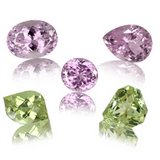
Kunzite jewelry
Kunzite is the pink to lilac variety of the mineral spodumene, a lithium aluminum silicate colored by trace amounts of manganese. First identified in 1902 by American mineralogist George Frederick Kunz, the stone is prized for its clean, pastel hues that range from near-colorless pink to deeper violet-pink. Kunzite is strongly pleochroic, meaning it shows different color intensities when viewed from different angles, which makes cutter orientation a key factor in the finished gem's appearance.
Origin and Key Properties of Kunzite
The original commercial deposit was found in the Pala district of San Diego County, California, where kunzite still comes from historic mines like the Oceanview and Pala Chief. Today the largest production comes from the Kunar and Nuristan provinces of Afghanistan, with additional sources in Minas Gerais, Brazil; Madagascar; Pakistan; and Myanmar. Kunzite forms in lithium-rich granite pegmatites alongside quartz, albite, tourmaline, and beryl, and crystals can reach very large sizes — faceted stones of 20 carats and up are not unusual.
Chemically, kunzite is LiAl(SiO₃)₂ with a Mohs hardness of 6.5 to 7. It is transparent to translucent with a vitreous luster and two directions of perfect cleavage, which is why the material is considered challenging to cut. Color runs from pale pink through lilac to saturated violet-pink; the most valued stones show a rich pink with a touch of purple.
Treatment disclosure matters with this gem. A significant portion of kunzite on the market has been irradiated to deepen the pink or violet color, sometimes followed by gentle heating to stabilize the result. Prolonged exposure to strong sunlight can fade both treated and untreated kunzite, a trait that earned it the old trade nickname "evening stone." At SilverRush Style we source natural material and note any known treatment on the product page.
Kunzite in Sterling Silver Jewelry
Because kunzite shows its color best in larger sizes, it is usually faceted in long shapes — emerald cuts, cushions, ovals, and pear cuts — that let light travel through the stone and pull out the pink. Cabochons and raw crystal slices appear in more casual designs, while collectors look for step-cut rectangles that highlight clarity. The cool white of sterling silver (.925) does not compete with the soft pink tone the way yellow gold can, so it keeps the color reading clean and true. Browse our kunzite jewelry collection for rings, pendants, and earrings; most pieces at SilverRush Style fall in the $40 to $180 range depending on carat weight and setting complexity.
Most of our kunzite settings are prong or bezel mounts in oxidized or high-polish silver. Bezels are a practical choice here because the stone's cleavage makes it vulnerable to sharp knocks on corner points, and a wrapped edge protects the girdle.
Care and Cleaning
Clean kunzite with warm water, mild dish soap, and a soft brush. Avoid ultrasonic and steam cleaners — vibration can split the stone along its cleavage planes. Keep kunzite jewelry out of direct sunlight for long periods to preserve color, and store pieces in a soft pouch away from harder gems like sapphire or topaz that can scratch the surface.
Frequently Asked Questions
Is kunzite a real gemstone or synthetic?
Kunzite is a natural gemstone, the pink to lilac variety of spodumene. Lab-grown spodumene exists but is uncommon in the jewelry trade; nearly all kunzite sold commercially is mined material, though much of it has been irradiated to improve color.
Does kunzite really fade in sunlight?
Yes. Both natural and irradiated kunzite can lose color with prolonged exposure to direct sunlight or high heat. Normal daily wear is fine, but do not leave kunzite pieces on a sunny windowsill or in a hot car.
Is kunzite durable enough for a ring?
At Mohs 6.5 to 7 kunzite is hard enough for occasional-wear rings, but its perfect cleavage means a sharp blow can chip or split the stone. Pendants and earrings are safer choices for daily use; for rings, choose a protective bezel setting.
How can I tell kunzite from pink topaz or morganite?
Kunzite shows strong pleochroism — rotate it and you will see the pink shift toward colorless or violet. Morganite tends toward peach-pink and pink topaz has higher refractive index and brighter fire. A gemologist can confirm identity with a refractometer reading of 1.660 to 1.676, typical for spodumene.
Talk to Our Jewelry Experts
Monday to Friday from 9AM to 5PM EST
