


 NECKLACES

 Shop now, pay later
Iolite
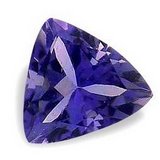
Iolite jewelry
Iolite is the gem-quality variety of cordierite, a magnesium iron aluminum silicate that ranges from violet-blue to inky indigo, with gray-blue and yellowish tones in off-axis views. The stone is strongly pleochroic, meaning it shows three distinct colors depending on viewing angle, which is why cutters must orient the rough carefully to capture the best blue. Medieval Norse navigators reportedly used thin slices of iolite as a polarizing filter to locate the sun on overcast days, earning it the nickname "Viking's compass." Today it is valued as an affordable alternative to blue sapphire and tanzanite.
Origin and Key Iolite Properties
Commercial iolite comes primarily from Sri Lanka, India (Tamil Nadu and Andhra Pradesh), Madagascar, Tanzania, Myanmar, and Brazil. Wyoming hosts the Palmer Canyon and Grizzly Creek deposits, which have produced some of the largest rough ever documented, including pieces over 24,000 carats. Sri Lankan material tends to show the classic saturated violet-blue, while African stones often lean toward a darker, more neutral blue.
Iolite carries the chemical formula (Mg,Fe)₂Al₄Si₅O₁₈ and registers 7 to 7.5 on the Mohs scale, placing it above tanzanite (6.5) in durability but below sapphire (9). It is transparent to translucent with a vitreous luster, a refractive index of 1.53–1.58, and specific gravity near 2.6. Cleavage is distinct in one direction, so cutters and wearers treat it with some care despite the respectable hardness.
Iolite is one of the few colored stones typically sold untreated. Heat, irradiation, and diffusion are not standard for this material because the color is stable and responds poorly to enhancement. Occasionally lower-grade rough is oiled or fracture-filled, but this is uncommon in finished jewelry. If you are buying iolite, assume natural color unless the seller specifies otherwise.
Iolite in Sterling Silver Jewelry
Faceted cuts dominate the iolite market because faceting releases the violet-blue flash that defines the stone. Ovals, cushions, trillions, and pears are standard, with step cuts used for larger rough to manage the pleochroism. Cabochons appear in bohemian and artisan pieces, and rough or raw slices show up in statement rings and pendants. At SilverRush Style, sterling silver (.925) is the metal of choice for iolite because the cool white tone of silver amplifies the blue-violet saturation without competing with it the way yellow gold can.
Our iolite jewelry typically runs from about $25 for small stud earrings and stackable rings up to $120 for larger statement pendants and cocktail rings with 2–5 carat center stones. Every piece uses natural iolite set in solid .925 sterling silver, not plated base metal.
Care and Cleaning
Clean iolite with warm water, mild dish soap, and a soft brush. Skip ultrasonic and steam cleaners — the cleavage plane makes iolite vulnerable to vibration and thermal shock. Keep it away from bleach, chlorine, and acetone, and remove rings before gardening or gym sessions. Store each piece in a separate pouch or lined compartment so harder stones like topaz, sapphire, or quartz do not scratch the surface.
Frequently Asked Questions
Is iolite a real gemstone?
Yes. Iolite is the gem variety of the mineral cordierite, mined commercially in Sri Lanka, India, Madagascar, Tanzania, Wyoming, and Brazil. It has been cut and set in jewelry for centuries and is recognized by every major gemological laboratory.
What is the difference between iolite and tanzanite?
Tanzanite is heat-treated zoisite mined only in Tanzania, with a Mohs hardness of 6.5 and prices often 10 to 50 times higher than iolite. Iolite is cordierite, rates 7–7.5 on Mohs, is typically untreated, and sells at a fraction of the cost. Iolite also shows stronger pleochroism.
Why is iolite called water sapphire?
The old trade name refers to iolite's resemblance to blue sapphire when viewed down the correct axis. The stone is not related to corundum and is softer than true sapphire, so reputable sellers now use the name iolite.
Can iolite be worn every day?
Iolite works well for earrings, pendants, and occasional-wear rings. Because it has distinct cleavage in one direction, daily-wear rings should use protective settings like bezels or low-profile prongs, and the stone should be removed before heavy manual work.
Talk to Our Jewelry Experts
Monday to Friday from 9AM to 5PM EST
