


 NECKLACES

 Shop now, pay later All Bracelets & Necklaces 96% OFF + All Rings 96% OFF
 Coral
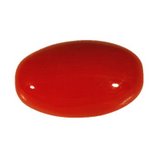
Coral jewelry
Coral is an organic gem produced by marine invertebrates called coral polyps, which secrete a calcium carbonate skeleton (CaCO₃) that hardens into the dense branches used in jewelry. Unlike quartz or beryl, it has a biological origin, placing it in the same organic-gem family as pearl, amber, and jet. The most sought-after varieties range from pale pink "angel skin" to deep oxblood red, with the opaque red cabochon shown above representing the classic Mediterranean type (Corallium rubrum).
Origin and Key Properties of Coral
Historically, the richest deposits of red Coral have come from the western Mediterranean — the waters off Sardinia, Sicily, Corsica, Tunisia, and Algeria — where harvesting has been documented since Greco-Roman times. The Torre del Greco district near Naples has been the world's primary cutting and trading center since the 1800s. Pacific sources include the waters around Taiwan, Japan (Kochi and Okinawa), and the Midway Islands, which yield the deep red "Aka," pale pink "Momo," and white "Shiro" grades. Pink and gold coral also come from Hawaiian seamounts under strict harvest quotas.
Coral is soft by gemstone standards, measuring 3 to 4 on the Mohs scale. Its composition is roughly 87% calcium carbonate with small amounts of magnesium carbonate and organic matter. It is opaque, with a dull to vitreous polish, and colors span white, pink, salmon, orange, red, and the rare black and gold varieties from Hawaii and the Caribbean. Specific gravity runs 2.60–2.70, and the refractive index sits around 1.48–1.65.
Treatments are common and buyers should know what to look for. Pale or blotchy material is frequently dyed to imitate deep "ox blood" red; wax and resin impregnation is used to stabilize porous pieces. "Bamboo coral" (Isis hippuris) is a lower-cost species that is almost always dyed red to mimic Corallium. Reconstituted coral — ground powder bonded with resin — is also sold widely. Natural, untreated red Coral retains its color throughout the piece and shows fine parallel striations under magnification.
Coral in Sterling Silver Jewelry
Because coral is soft and carves well, the dominant cuts are smooth cabochons, rounded beads, and polished branch sections. Faceting is almost never done — it would dull the surface and waste material. Raw twig-form coral also appears in pendants and statement rings where the natural branching is part of the design. Sterling silver (.925) is the standard setting metal: its cool white tone pushes the warm reds and pinks forward without the yellow cast that gold can add, and bezel settings protect the soft edges of the stone from knocks. At SilverRush Style, most coral jewelry falls in the $25–$120 range, with larger statement cuffs and multi-stone necklaces reaching higher.
Red Mediterranean coral remains the classic choice for Southwestern and tribal-style silverwork, while pink and salmon tones pair well with Bali-style filigree and modern minimalist bezels. Beaded coral strands with silver spacers are a staple of Native American and Tibetan-inspired designs sold on the site.
Care and Cleaning
Clean coral with a soft cloth dampened in mild soapy water, then dry immediately. Never use ultrasonic or steam cleaners — vibration and heat will crack the stone and strip any stabilizing wax. Keep coral away from vinegar, lemon juice, perfume, hairspray, chlorine, and household cleaners, since calcium carbonate dissolves in even weak acids. Prolonged sun exposure can fade dyed pieces. Store coral jewelry in a soft pouch separate from harder stones like quartz or topaz, which will scratch it.
Frequently Asked Questions
Is coral a real gemstone?
Yes. Coral is classified as an organic gemstone, the same category as pearl and amber. It is produced by living marine polyps rather than formed through geological processes, but it has been cut and worn as a gem for more than 5,000 years.
How can I tell if red coral is natural or dyed?
Natural Corallium rubrum shows fine parallel growth lines and uniform color through the piece. Dyed bamboo coral often has darker color concentrated in cracks and pores, and a cotton swab with acetone may pick up pigment. Reputable sellers disclose dyeing and species.
What does coral symbolize?
In traditional lore, coral is linked to protection — Romans placed branches on children to guard against harm — and to life force, fertility, and calm emotions. In Vedic astrology, red coral is associated with Mars and worn for courage and vitality.
Can coral jewelry be worn daily?
With care, yes. Because coral is only 3–4 on the Mohs scale, reserve it for earrings, pendants, and occasional-wear rings rather than daily rings or bracelets that take impact. Remove before swimming, showering, or applying cosmetics.
Talk to Our Jewelry Experts
Monday to Friday from 9AM to 5PM EST
