


 NECKLACES

 Shop now, pay later
Calsilica (rainbow calsilica)
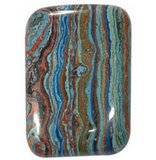
Calsilica (rainbow calsilica) is a composite material composed of crushed carbonate minerals — primarily calcite — bonded with stabilizing polymer resins and colored with pigments to produce the banded red, blue, green, yellow, and black layers the stone is known for. First introduced to the gem market at the Tucson Gem and Mineral Show in the early 2000s, it was marketed as a natural find from Chihuahua, Mexico, though laboratory analysis has since established it as a manufactured product. The opaque material takes a high polish and is cut almost exclusively as cabochons for silver jewelry.
Origin and Key Properties of Calsilica (rainbow calsilica)
The original sales story placed calsilica in volcanic rhyolite seams near Chihuahua, Mexico. Gemological testing by the Gübelin Gem Lab and other institutions in the mid-2000s found no geological evidence for this claim. Electron microprobe and infrared spectroscopy revealed fine calcite powder, synthetic dyes, and a plastic or resin binder — a fabricated composite rather than a mined stone. Today reputable dealers describe it accurately as a reconstituted or man-made material.
Because the base is calcite (CaCO₃) held in resin, Mohs hardness sits around 3 on the carbonate side, with the polymer matrix giving the finished cabochons slightly more working toughness than pure calcite. It is fully opaque with a waxy to vitreous polish. Typical color bands run through magenta, cobalt blue, emerald green, lemon yellow, white, and deep black, arranged in sharp parallel layers that mimic banded agate or landscape jasper.
Treatment disclosure matters here: every piece of rainbow calsilica on the market is dyed and resin-stabilized by definition — that is how the material is made. There is no untreated version. Heat and solvents can soften the binder, so the material should always be sold with clear treatment information.
Calsilica in Sterling Silver Jewelry
Calsilica is almost always cut en cabochon — oval, round, rectangle, or freeform domes that showcase the color banding across the face of the stone. Faceting is not practical given the soft, opaque composite structure. The cool white tone of sterling silver (.925) frames the saturated reds, blues, and greens without competing with them, which is why bezel-set silver mountings dominate the category. Shop our selection of calsilica (rainbow calsilica) jewelry for current pendants, rings, and earrings. Price range at SilverRush Style typically runs $25–$90 depending on stone size and setting complexity.
When choosing a piece, look at the banding pattern under direct light. The most collectible cabochons show crisp, parallel color lines with minimal bleeding between layers and a smooth, even polish. Chips along the girdle or dull patches in the polish indicate rough handling during cutting.
Care and Cleaning
Clean calsilica with a soft dry or slightly damp cloth only. Avoid ultrasonic cleaners, steam cleaners, household detergents, acetone, alcohol, and any solvent — these will attack the resin binder and strip the pigments. Keep pieces away from prolonged direct sunlight and high heat (hot cars, radiators), which can fade colors and soften the matrix. Store in a padded pouch separate from harder stones.
Frequently Asked Questions
Is rainbow calsilica a natural stone?
No. Independent gemological testing has shown rainbow calsilica is a man-made composite of powdered calcite, synthetic dyes, and polymer resin. It was introduced at the Tucson Gem and Mineral Show and originally marketed as a Mexican find, but no natural deposit has ever been verified.
How hard is calsilica on the Mohs scale?
The calcite component rates about 3 on the Mohs scale. The resin binder adds some working durability, but the material is still soft and scratches easily. Treat it as a collector or occasional-wear stone rather than daily hardwear.
Why are the colors so saturated and banded?
The bands are produced by stacking thin layers of dyed calcite powder and pressing them together with resin before curing. This manufacturing method creates the sharp parallel color lines that distinguish calsilica from natural banded stones like agate or jasper.
Can I wear calsilica jewelry every day?
It is better suited to pendants and earrings than rings or bracelets, which take more abrasion. Remove before cleaning, swimming, or applying lotions and perfumes. With gentle handling, a bezel-set pendant in sterling silver will hold up for years.
Talk to Our Jewelry Experts
Monday to Friday from 9AM to 5PM EST
