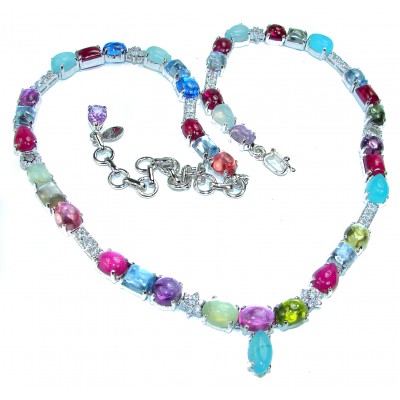


 NECKLACES

 Shop now, pay later All Bracelets & Necklaces 96% OFF + All Rings 96% OFF
 Aventurine
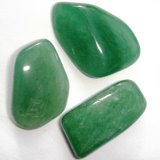
Aventurine jewelry
Aventurine is a translucent-to-opaque variety of quartz (SiO₂) distinguished by tiny mineral inclusions that produce a shimmering optical effect known as aventurescence. The stone ranges from the familiar medium-green through blue, peach, red-brown, yellow, and gray, with color driven by the type of platy inclusion trapped inside the quartz matrix. Green aventurine, the most commercial variety, owes its shade and silvery sparkle to fuchsite, a chromium-rich mica. It is classified as a microcrystalline quartz and, because it contains multiple minerals, is sometimes described as a rock rather than a single mineral.
Origin and Key Properties of Aventurine
India is the dominant source of green aventurine on the global market, with major deposits near Mysore and the Karnataka region supplying most rough used in jewelry today. Commercial quantities also come from Brazil (red and blue material), Russia (the Ural Mountains), Chile, Spain, Austria, and Tanzania. Historically, the stone was confused with jade and amazonite, and Russian green aventurine was used in the 19th century for carved bowls and decorative objects in the court workshops of Saint Petersburg.
On the Mohs scale aventurine measures 6.5 to 7, the same range as other quartz varieties, with a specific gravity of about 2.64 to 2.69. It is usually opaque, occasionally translucent at thin edges, and breaks with a conchoidal fracture. The inclusions responsible for its glitter are fuchsite mica (green and blue stones), hematite or goethite (red-brown to gold-brown stones), and pyrite in rarer material. The chemistry is that of quartz, SiO₂, with the included minerals contributing chromium, iron, or aluminum depending on color.
Natural aventurine is rarely treated. Most rough reaches the market cut and polished without dyeing, heating, or irradiation. Buyers should be aware of two lookalikes: green glass with copper flecks (sold as "goldstone" or "aventurine glass") is a man-made material invented in 18th-century Venice, and dyed green quartzite is occasionally mislabeled. Reputable sellers disclose both.
Aventurine in Sterling Silver Jewelry
Because aventurine is opaque and valued for its surface shimmer rather than internal clarity, cutters favor cabochons, tumbled freeforms, smooth beads, and carved shapes. Faceting is uncommon outside of translucent blue material. The cool tone of sterling silver (.925) sets off the green body color without competing with it, and the metal's light reflectivity amplifies the fuchsite sparkle. Our aventurine jewelry collection runs from about $25 for simple bead earrings and small pendants to roughly $120 for statement rings and multi-stone necklaces, with most pieces priced between $35 and $75.
The stone suits daily wear in pendants, earrings, and occasional-wear rings. For rings intended as everyday pieces, choose a bezel setting over prongs — the softer polished surface of aventurine can pick up scratches from hard contact, and a bezel protects the girdle and edges.
Care and Cleaning
Clean aventurine with warm water, mild dish soap, and a soft brush; rinse and dry with a lint-free cloth. Avoid ultrasonic and steam cleaners, which can stress inclusion boundaries, and keep the stone away from bleach, acetone, and jewelry dips that will tarnish the silver and dull the polish. Prolonged direct sunlight may fade some dyed or color-enhanced pieces, though natural material is generally color-stable. Store each piece in a separate pouch to prevent scratching from harder stones.
Frequently Asked Questions
Is it spelled aventurine or adventurine?
The correct spelling is aventurine. "Adventurine" is a common misspelling. The name comes from the Italian phrase a ventura ("by chance"), referring to the accidental 18th-century discovery of aventurine glass in Murano, Italy — the quartz mineral was later named after the glass it resembled.
What is aventurine used for in jewelry?
Aventurine is cut into cabochons, beads, and carved drops for pendants, earrings, bracelets, and rings. Its 6.5–7 hardness makes it durable enough for regular wear, and its green color pairs well with sterling silver.
How can I tell real aventurine from goldstone?
Goldstone is manufactured glass with evenly distributed copper flecks that produce a uniform, geometric sparkle. Natural aventurine shows irregular, softer shimmer from mica platelets, has a cooler feel, and often displays subtle color variation across the stone. Under magnification, real aventurine reveals flat reflective flakes rather than round copper crystals.
Does aventurine come in colors other than green?
Yes. Blue aventurine (colored by dumortierite or fuchsite) comes mainly from Brazil and India, red and peach aventurine (hematite or goethite inclusions) comes from Brazil and Russia, and yellow to gold-brown material is also mined in India. Green remains the most widely available color.
Talk to Our Jewelry Experts
Monday to Friday from 9AM to 5PM EST
Recently Viewed